Little illnesses, clearly explained
Croup.
The cough that
changes at night.
A cold-like start. A barking cough. A noisy breath. Here’s the pattern—and what deserves attention sooner. [5]
An illness has a pattern.
A child has their own.
Explore the stages, rather than counting down to a guaranteed recovery. Breathing matters more than the day on the calendar.
A usual croup course. Some symptoms last longer; worsening symptoms need review. [1]
It can start like an ordinary cold
A runny nose, fever and cough can come before the distinctive bark. [5]
The cough sounds different
A barking cough and hoarse voice are typical. Stridor is a high-pitched sound on breathing in. [5]
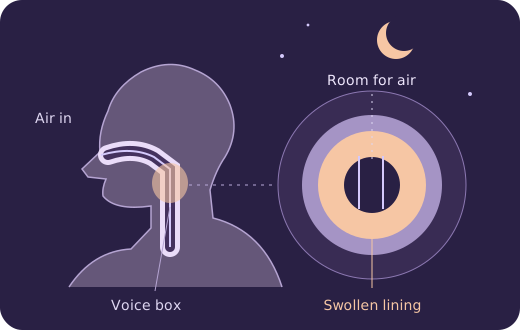
Night-time can be harder
Symptoms may be worse on the second or third night. Stridor while calm needs urgent hospital assessment. [1]
Improvement is not a deadline
The Canadian Paediatric Society describes a usual symptom duration of 3–7 days. A cough may outlast other symptoms. [4]
These are overlapping stages, not a prediction for your child.
A clinician looks at
the whole picture.
A cough clip can be useful context. It cannot establish the diagnosis by itself.
The history
When did it start? How has breathing changed? Age and previous episodes help frame the assessment. [3]
The breathing
A clinician assesses effort, sounds, colour and alertness. A quieter breathing sound does not always mean improvement. [3]
Tests, when needed
Typical croup is diagnosed clinically. Blood tests, X-rays and swabs are not routinely needed; unusual features may prompt other investigations. [3]
Similar symptoms.
Different questions.
These are reasons to seek an assessment. They are not a way to rule a disease in or out at home.
Cold or bronchiolitis?
Cold symptoms overlap. Wheeze, fast breathing and feeding difficulty can occur with bronchiolitis. [2]
Whooping cough?
Bouts of coughing can resemble other illnesses. The sound alone does not settle the diagnosis. [2]
Something inhaled?
Sudden symptoms after choking raise concern for an inhaled object. Seek urgent help. [4]
A different airway problem?
Drooling, trouble swallowing or an unusually ill appearance can indicate another serious cause. Seek emergency help. [4]
Recurrent, prolonged or unusually severe symptoms—and croup-like symptoms in a baby under 6 months—need further assessment. [4]
Don’t wait for the timeline.
If you suspect croup, contact a clinician for advice. They can assess whether treatment is needed. [2]
Call emergency services now [2] [6]
- Struggling to breathe
- Blue or grey lips, skin or tongue
- Hard to wake or unusually unresponsive
- Drooling with difficulty swallowing
Get urgent medical assessment [1]
- Stridor while resting calmly: go to hospital
- Breathing is getting harder or symptoms worsen
- Poor drinking or concern about dehydration
For mild croup confirmed by a clinician: keep your child calm, offer fluids and check them at night. Avoid steam; it does not help and can burn. [2]
Bring the story.
Leave the guesswork.
A few observations can help you describe what changed. Seek care first if symptoms are urgent.
Keep a shared record in Unpanic →- 01When symptoms began
- 02Breathing while calm
- 03Drinks and urine
- 04Medicines already given
Sources & editorial notes
Original schematic and AI-assisted draft, based on the sources below. This is general education; it does not diagnose your child.
- Royal Children’s Hospital Melbourne · Croup — Parent information; reviewed June 2026.
- NHS · Croup — Parent information; page reviewed August 2023. Read alongside the newer RCH source.
- Royal Children’s Hospital Melbourne · Clinical practice guideline — Clinical guideline; updated September 2024.
- Canadian Paediatric Society · Acute management of croup — Practice point; updated March 2026.
- Nationwide Children’s Hospital · Croup — Parent information; revised 2023.
- Seattle Children’s · Croup — Parent information; consulted for symptoms and warning signs.